Quick Summary
| Ticket price (adults) | €40 high season (Mar–Oct) · €15 winter (Nov–Feb) |
|---|---|
| Children 7–18 / students | €15 in season · €5 in winter · under 7 free |
| Included in the ticket | Full wall circuit + Fort Lovrijenac |
| Opening hours | From 08:00 Apr–Oct (closing 17:30–19:30) · 09:00–15:00 Nov–Mar |
| Time needed | 1.5–2 hours for the full loop |
| Advance booking | Strongly recommended May–October |
Prices and hours are taken from the official ticket office (citywallsdubrovnik.hr) and may change — always double-check before your visit.
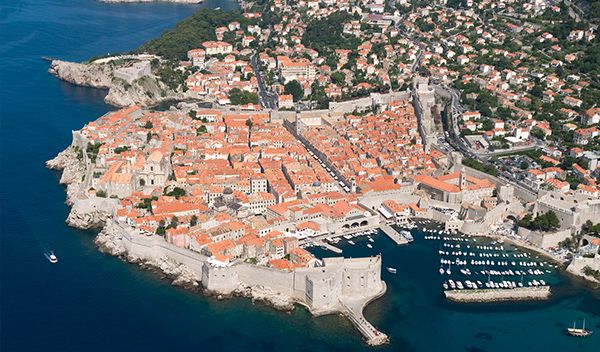
A Dubrovnik City Walls ticket buys you the single best view in Croatia: a complete 1,940-metre circuit above terracotta rooftops on one side and the open Adriatic on the other. The walls have guarded the Republic of Ragusa since the Middle Ages, they've never been breached by a hostile army, and since 1979 they've been on the UNESCO World Heritage list. Around a million people walk them every year — which is exactly why a little planning pays off.
This guide is written by independent travellers, not the ticket office. We'll tell you what the ticket costs and what it quietly includes (a second fortress most people miss), which of the three entrances has the shortest queue, and when to go so you're not shuffling behind cruise groups in full sun.
What the Dubrovnik City Walls ticket includes
One ticket covers the entire wall circuit — all towers, bastions and sea-facing ramparts — plus Fort Lovrijenac, the free-standing fortress on the cliff just outside the Pile Gate. That second entry is easy to overlook: the fort is not physically connected to the walls, so many visitors pay for the walls, never realise Lovrijenac is included, and walk past it. Keep your ticket after you exit the walls and show it again at the fort.
- Full 1,940 m wall walk — one continuous loop, walked anticlockwise (one-way system).
- Minčeta Tower — the highest point of the fortifications, with the classic postcard view over the Old Town.
- Fort Bokar, Fort St John and the sea bastions — all part of the circuit.
- Fort Lovrijenac — separate entrance outside Pile Gate, included with the same ticket.
According to the official ticket office, revenue from tickets funds the ongoing restoration of the monuments — the walls are maintained by the Society of Friends of Dubrovnik Antiquities, a conservation society founded in 1952.
How much does it cost?
As listed on the official site, an adult ticket costs €40 from March to October and drops to €15 from November to February. Children aged 7–18 pay €15 in season (€5 in winter), children under 7 enter free, and students with a valid ISIC card get the reduced rate. Full breakdown, comparison with the Dubrovnik Pass and every way to pay less: see our tickets and prices guide.
Worth knowing: the 1-day Dubrovnik Pass costs €45 — only €5 more than a peak-season wall ticket — and adds the Rector's Palace, several museums and free city buses. If you plan to see anything else in town, it usually wins on maths alone.
Where to enter: the three gates
There are three entrances to the wall walk, and picking the right one is the closest thing to a queue-jumping trick that actually exists here:
- Pile Gate entrance — just inside the main city gate, near the Church of St Saviour. The busiest by far; this is where cruise groups start.
- Ploče Gate entrance — by St Luke's tower on the eastern side. Usually the shortest queue, and you climb the toughest section (up to Minčeta) while your legs are fresh.
- St John's Fort entrance — near the Maritime Museum by the Old Port. Quietest of the three, handy if you're coming from the harbour.
The circuit is one-way (anticlockwise), there's no re-entry once you exit, and the last admission is before closing time — arrive at least 90 minutes before close if you want the full loop. Details and month-by-month times: opening hours.
When to walk the walls
The walls have almost no shade and a lot of stone that radiates heat. In July and August the difference between a great visit and an ordeal is entirely about timing:
- 08:00 sharp — coolest air, softest light, and you're ahead of every tour group in the city.
- Two hours before closing — golden light on the rooftops, cruise passengers long gone. In June–July that means walking from about 17:30.
- Avoid 10:00–15:00 in summer — this is when cruise ships empty into the Old Town. Queues at Pile can pass 45 minutes.
Bring water (a bottle each — there are only a couple of small kiosks up top), a hat, and sun cream. In winter the walls are blissfully empty and the €15 ticket is one of Europe's best sightseeing bargains, but hours are short (09:00–15:00) and the walk closes in strong wind.
Is it worth €40? An honest answer
Yes — with two caveats. The walk takes 1.5–2 hours and involves a lot of stairs, including steep climbs to Minčeta Tower; if stairs are a real problem, the ticket buys mostly frustration. And if you visit at 1 pm in August without water, no view can compensate. Go early or late, take it slowly, and the walls justify every cent: you see the entire Old Town plan from above, the island of Lokrum, the fort that doubled as the Red Keep in Game of Thrones, and fishing boats leaving the same harbour the Ragusan fleet once used.
Beyond the ticket: tours, forts and where to stay
If you want the history explained rather than just the views, a guided wall or Old Town walking tour adds context that the (sparse) signage up top doesn't. Fans of the show should look at the dedicated Game of Thrones tours — Dubrovnik was King's Landing for six seasons. History-minded visitors can go deeper on the two star fortifications, Lovrijenac and Bokar. And because the Old Town sells out months ahead in summer, we've put together a straight-talking guide to hotels near the City Walls — including when to stay outside the walls on purpose.
Frequently Asked Questions
How much is the Dubrovnik City Walls ticket in 2026?
According to the official ticket office, adults pay €40 from March to October and €15 from November to February. Children aged 7–18 and ISIC students pay €15 (€5 in winter); children under 7 enter free.
Do I need to book Dubrovnik City Walls tickets in advance?
It's not compulsory, but from May to October it's strongly recommended. Online tickets let you skip the ticket-office queue at Pile Gate, which regularly exceeds 30–45 minutes when cruise ships are in port.
Is Fort Lovrijenac included in the City Walls ticket?
Yes. The same ticket covers Fort Lovrijenac, the fortress on the cliff outside Pile Gate. Keep your ticket after walking the walls and show it at the fort's entrance.
How long does it take to walk the walls of Dubrovnik?
The full 1,940 m circuit takes about 1.5–2 hours at a relaxed pace with photo stops. Fast walkers can do it in under an hour; in summer heat, allow more and carry water.
Can you walk the City Walls for free?
No. The walls are a paid monument and ticket revenue funds their restoration. The only reduced options are the winter tariff (€15), children's rates, and inclusion in the Dubrovnik Pass.
Which entrance to the City Walls is best?
The Ploče Gate entrance usually has the shortest queue and lets you tackle the steepest section first. Pile Gate is the busiest; the St John's Fort entrance near the Old Port is the quietest.
Are the Dubrovnik City Walls open in winter?
Yes, year-round except 25 December. Winter hours are shorter (09:00–15:00) and the adult ticket drops to €15, per the official site.
Ready to walk the walls?
Summer time slots sell out — book your entry in advance and keep your plans flexible with free cancellation on most options.